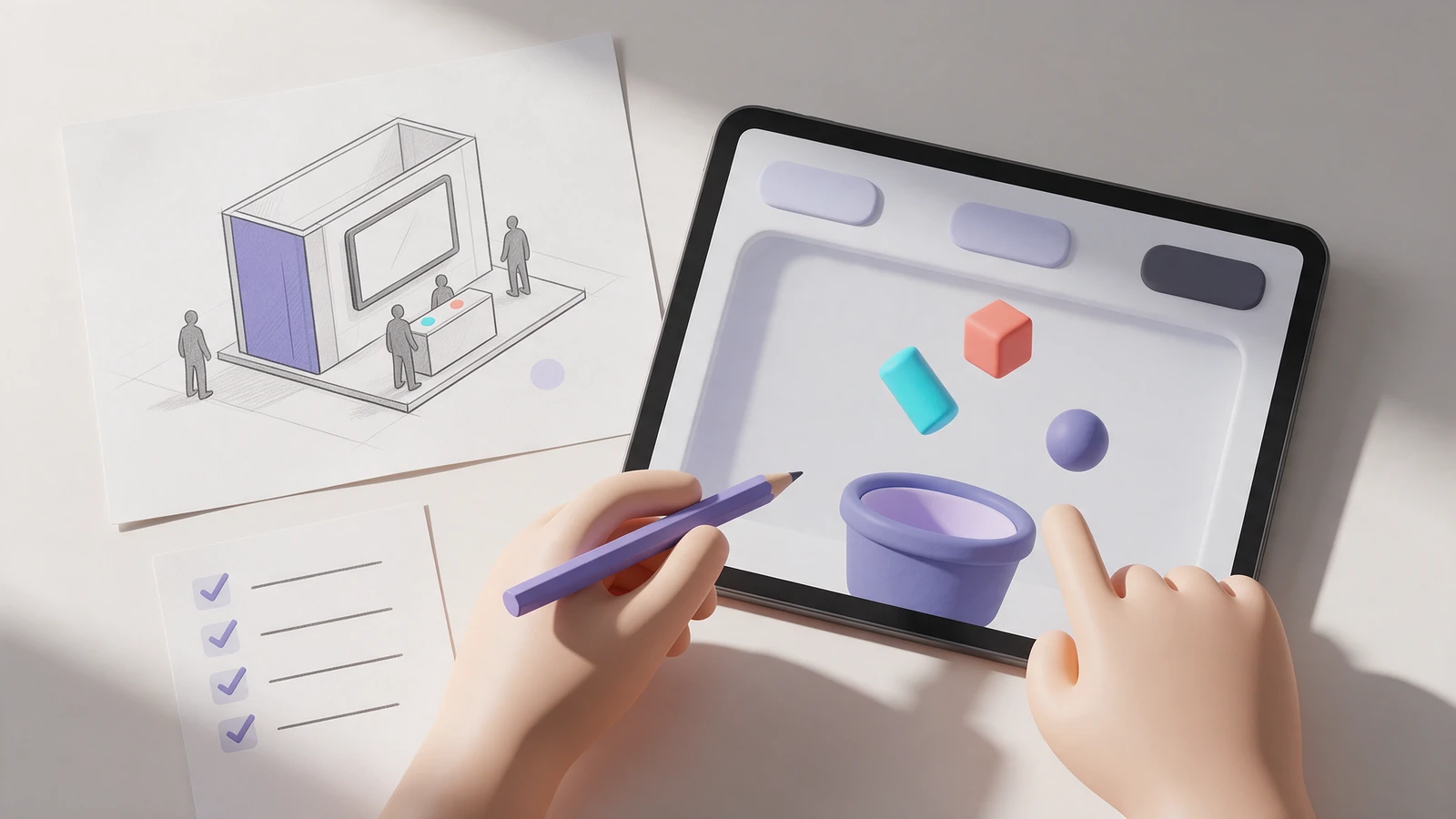
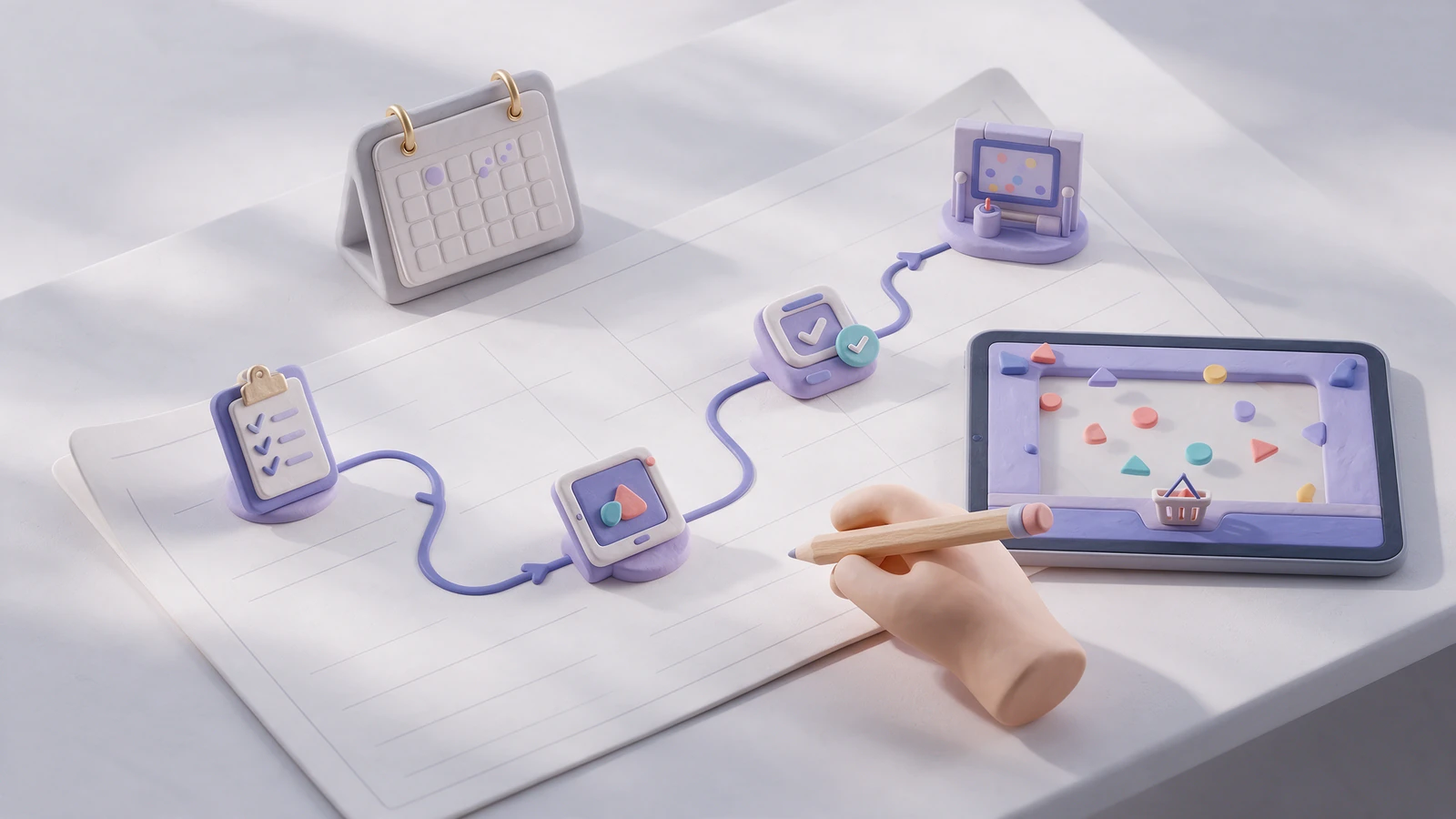
Five stages from brief to show day
- Brief and scope: we talk through your goal, players, screens, and event date, check feasibility, and send a quote
- Prototype: we build one prototype version for you to play before you decide, so you see the real rules and pace instead of imagining them from a document
- Brand content and revisions: your logo, product images, questions, and campaign messages go into the game, then you review and request changes
- Usability testing: we check resolution, touch response, speed, and how each new round starts, to prevent problems on show day
- Set-up and show day: we test the whole system before the event opens, and our technical team stays on site from opening to close
What slows a project down
Usually not the game itself, but information that arrives late: product images not yet approved, questions still waiting for legal review, or screen specs that only come in after work has started. Agree on a content deadline together from the start and have one approver on your side, and the work stays on plan much more easily. Our brief checklist helps you gather it all up front.
Can you do a rush job?
Tell us your event date when you ask for a quote. If time is short, we will suggest a way to make it, such as adapting a game whose rules already exist instead of designing a new one from scratch. We will tell you plainly from the start what can and cannot be done in time, because a game that has not been tested before show day is a risk we do not want you to take. See how we build booth games.
Read next: What budget do you need for a booth game?
FAQ
How many days does a booth game take?
At least one week, depending on the game format and content.
Does the date we send images affect delivery?
Yes. Content that arrives late pushes back both the content stage and the testing stage.
Do you test before show day?
Yes. We test on the real screens before show day, and again on site before the event opens.
Explore our services, review the packages, or discuss your project with the studio.